
Gray Blending vs Full Coverage: Which Is Right for You?
If you’ve started noticing more gray, you’ve probably asked yourself the question quietly at first:
Do I keep covering it… or do I transition differently?
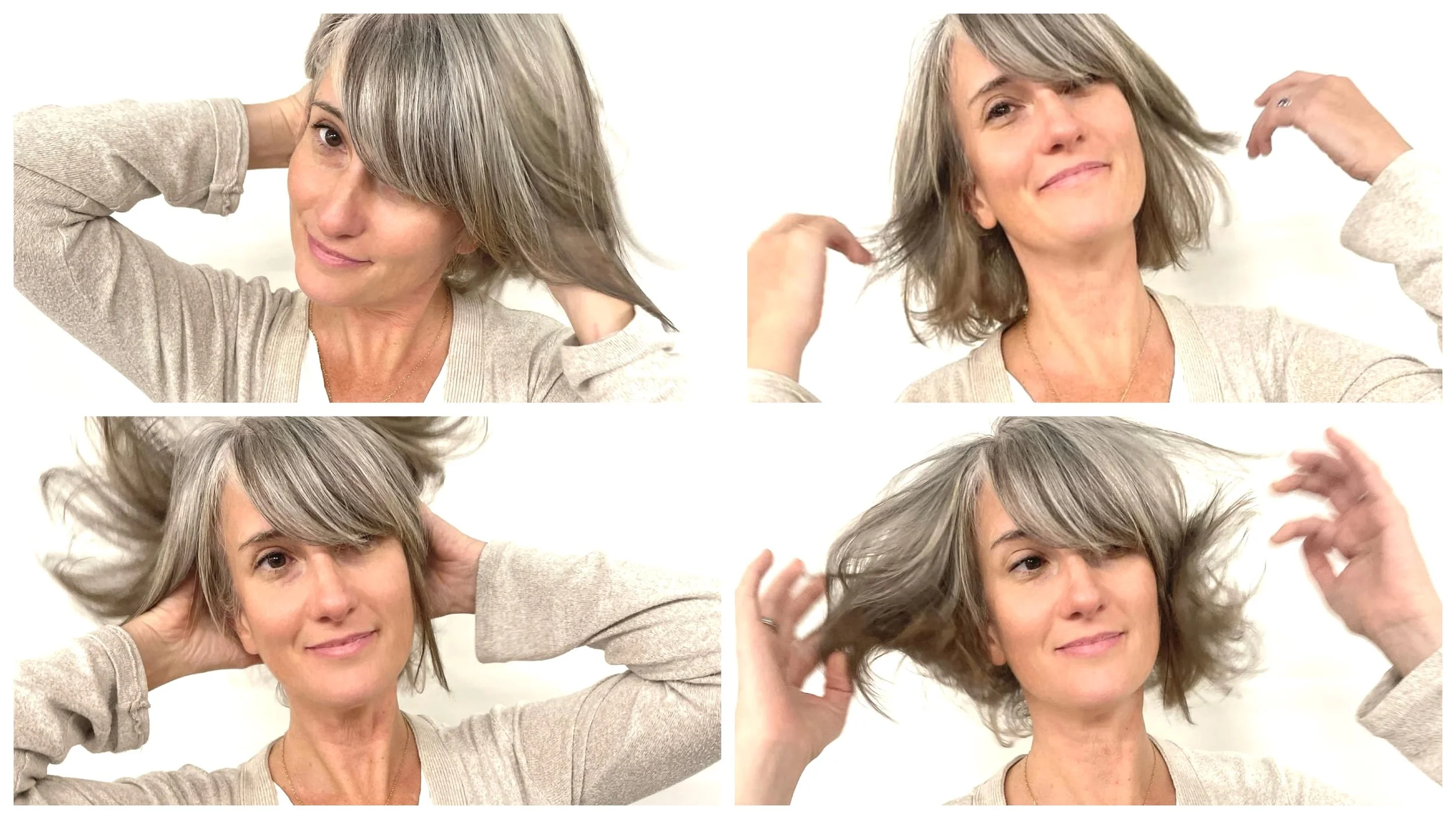
Have you wondered if you could stop coloring your grays all over? Well, you can! Gray Blending creates a smooth transitional blend for easier grow-out and time between appointments.
The conversation around gray hair has shifted. Some people want seamless coverage forever. Others are leaning toward softer grow-out and lower maintenance. And somewhere in the middle is gray blending.
If you’re comparing gray blending vs full coverage color, here’s what actually separates the two.
What Is Full Coverage Gray Color?
Full coverage color is exactly what it sounds like. Permanent color is applied at the root to completely cover gray hair. The goal is uniform, opaque coverage from scalp to ends.
This approach works well if you:
Prefer a rich, solid tone
Want zero visible gray between appointments
Like a polished, consistent finish
Don’t mind a 4–5 week maintenance schedule
Your look is your personal preference. You can choose a gray blending look all-over or start with a face-frame blend. Maybe you grow out a gray-blended money piece. You hair is an expression of yourself. Love the way you look!
The trade-off? As your hair grows, a line of demarcation appears where natural gray meets colored hair. That’s why maintenance tends to be frequent and consistent.
It’s structured. Predictable. Controlled.
For many clients, that reliability feels right.
What Is Gray Blending?
Gray blending takes a different approach.
Instead of fully covering gray, it diffuses the contrast between your natural gray and your existing color using strategic highlights, lowlights, and tonal refinement.
The goal isn’t to eliminate gray. It’s to integrate it.
If you’re wondering how long gray blending takes to fully transition, we break down the real 6-month timeline here.

Dramatic Gray Blended hair feels rich, intentional and modern.
When done thoughtfully, gray blending creates dimension so regrowth appears softer and less defined. Maintenance often stretches to 8–12 weeks because there’s no harsh line forming at the root.
It’s less about hiding gray and more about designing around it.
If you’re wondering how long gray blending takes to fully transition, we break down the real 6-month timeline here.
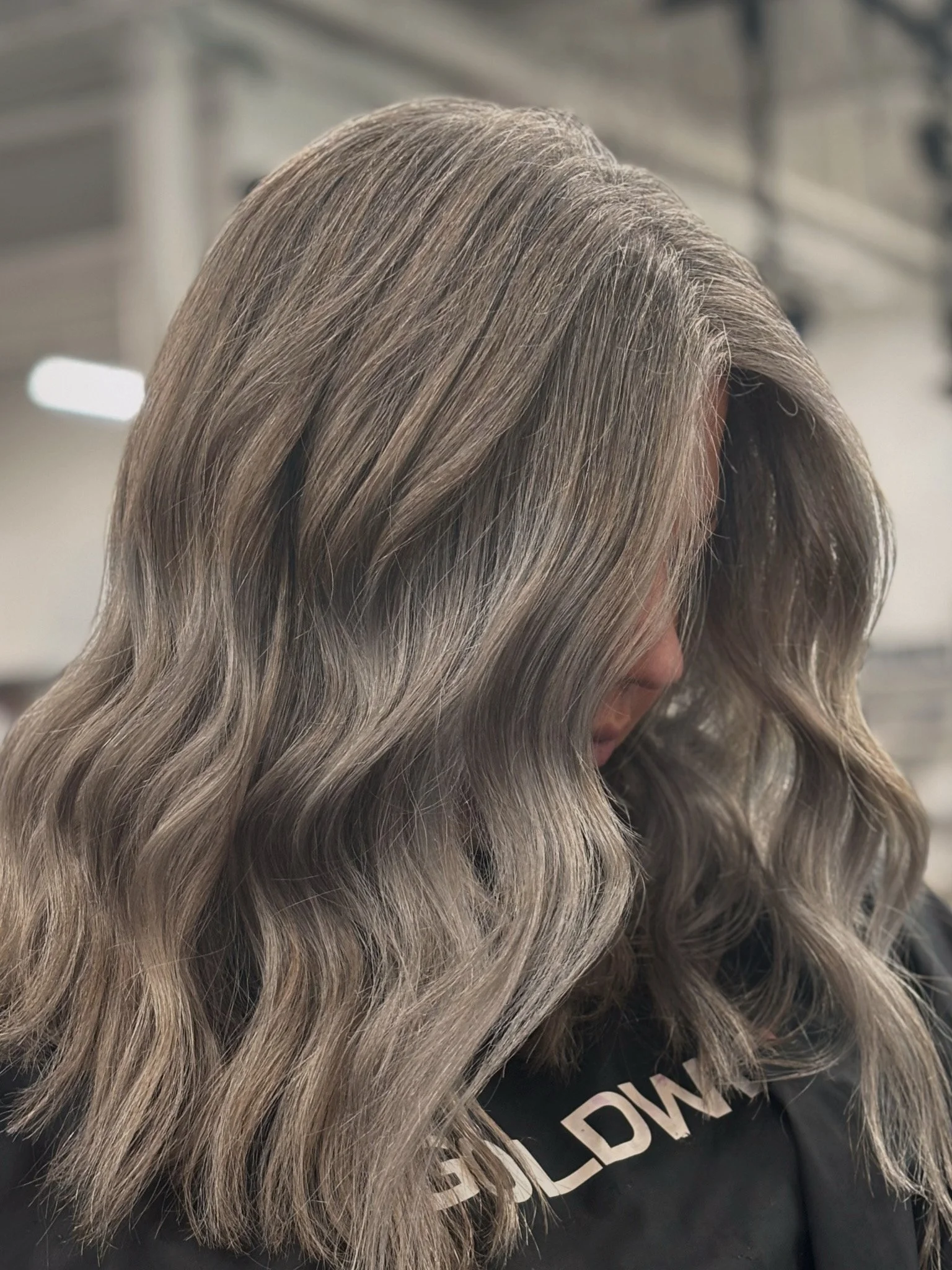
Using Goldwell hair color, hair is blended to flawlessly meld with her silver strands to create an intentional blend that grows out beautifully
Maintenance: The Practical Difference
This is usually the deciding factor.
Full Coverage Color:
Root touch-ups every 4–5 weeks
Clear regrowth line
Higher frequency appointments
More consistent chemical processing
Gray Blending:
Appointments typically every 8–12 weeks
Softer grow-out
Dimensional regrowth
Gradual transition over several months
Neither is “better.” They simply require different commitments.
If you like predictability and uniform color, full coverage may feel comfortable.
If you prefer flexibility and softer grow-out, gray blending may feel freeing.
The Visual Difference
Full coverage creates a smooth, single tone. It reflects light evenly and looks polished.
Gray blending creates movement. Highlights and lowlights catch light differently, making gray less noticeable because contrast is reduced.
Think of it this way:
Full coverage says, “Stay the same.”
Gray blending says, “Evolve.”
Both can look beautiful. The difference is aesthetic philosophy.

Before and after Gray-Blending Transformation. From red hair to gray-blended. Easier upkeep, low-maintenance hairstyle.
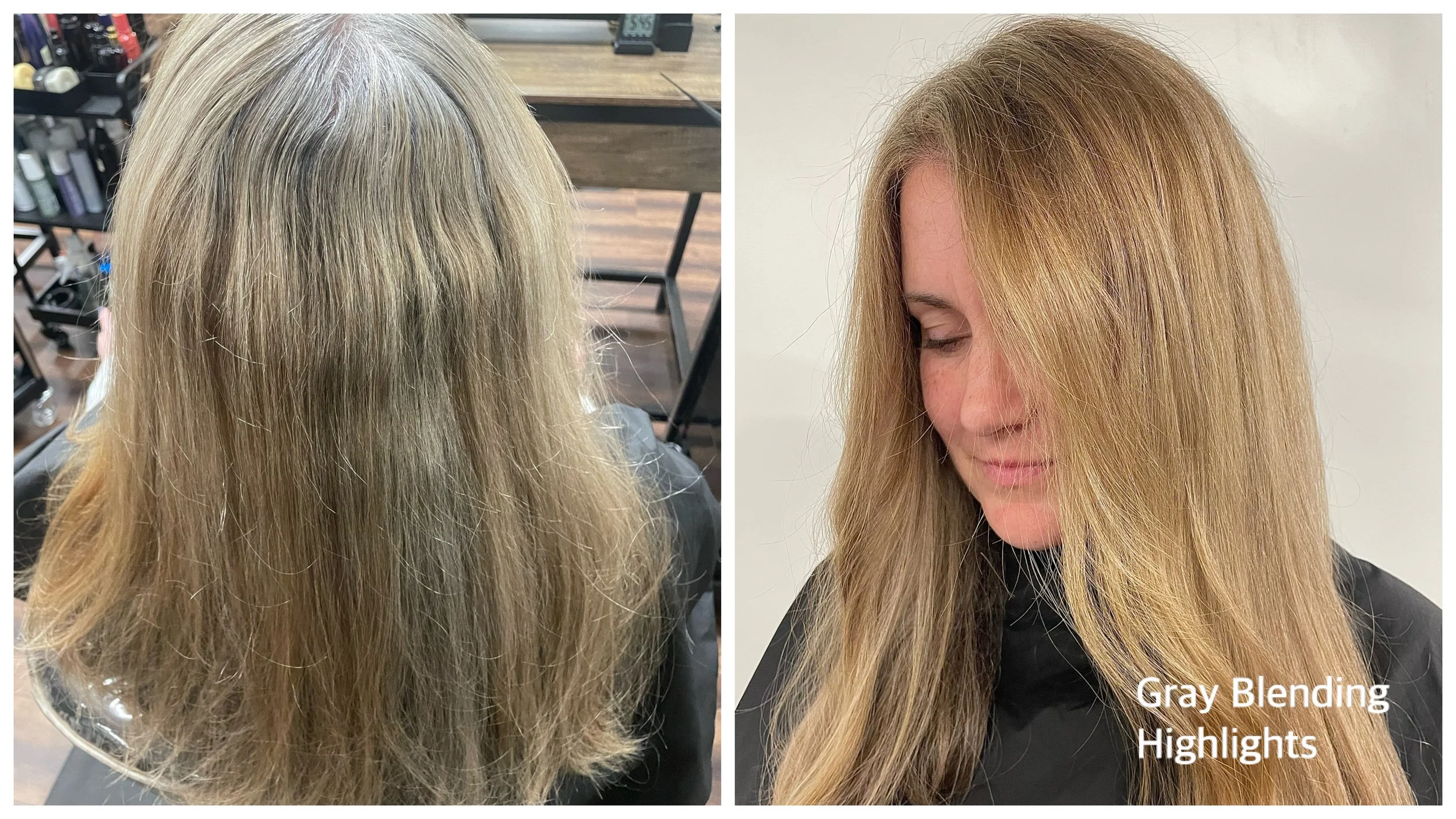
Gray-Blending before and after transformation. Smoother, less-harsh grow-out with less of a demarkation line at the root. bLUXE clients love their gray-blending!
The Emotional Side of the Decision
This part matters more than most people admit.
Some clients feel empowered maintaining full coverage. It feels put-together, intentional, and consistent with how they’ve always worn their hair.
Others feel exhausted by rigid 4-week touch-ups and constant root monitoring. They want something softer. Something that grows with them instead of against them.
There’s no moral hierarchy here. Just alignment.
The right choice is the one that fits your lifestyle, your maintenance tolerance, and how you want to feel when you look in the mirror.
Who Should Choose Full Coverage?
Full coverage color may be ideal if you:
Want zero visible gray at all times
Prefer darker, uniform tones
Like a structured appointment schedule
Are not interested in a multi-step transition
It offers predictability and immediate opacity.
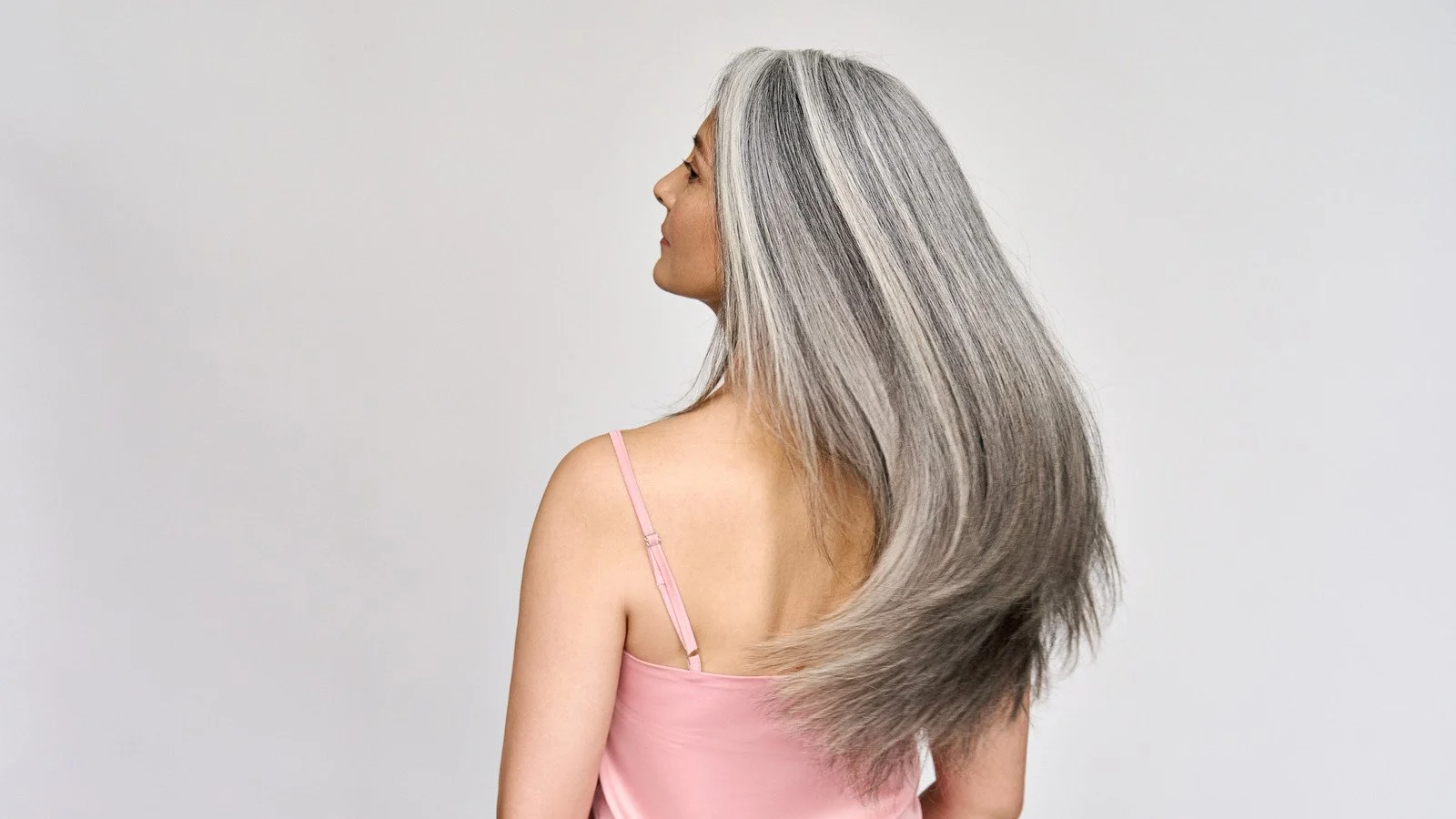
Gray blending helps lessen harsh regrowth lines to transition you from monthly full-coverage color appointments to your natural gray hair color.
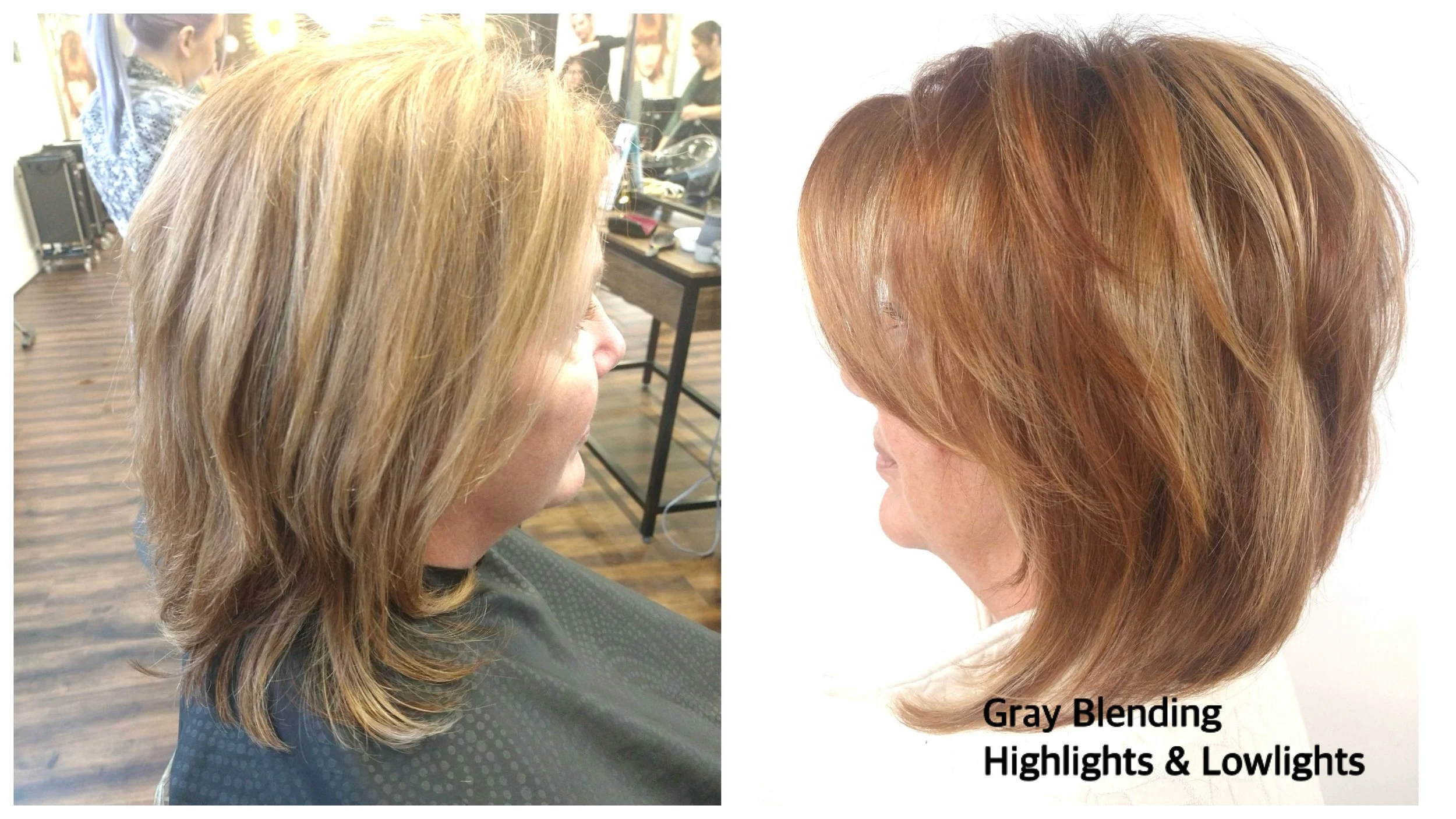
Gray-Blending isn’t always blonde. Any hair color can be blended. Auburn, Red, Brunette and Blonde. Here, senior stylist, Sandra Wilkey creates a beautiful blend of auburn copper hair and blonde and silver highlights.
Who Should Choose Gray Blending?
Gray blending may be ideal if you:
Are tired of frequent root touch-ups
Prefer dimension over solid color
Want a softer grow-out
Are open to a gradual transition
Value long-term hair health and reduced processing
It’s a strategy rather than a single appointment.
And strategy takes planning.
Can You Switch Later?
Yes!
Many clients move from full coverage to gray blending over time. The transition typically happens gradually over several appointments to protect hair integrity and maintain balance.
Likewise, someone who tries gray blending can return to full coverage if they prefer.
Hair color isn’t permanent. It’s adjustable.

Did You Know…
Even silver hair can be low-lighted and toned for a more bright and natural look

Visit the bLUXE studio and explore all we have to offer
So, Gray Blending vs Full Coverage Color — Which Wins?
The better question is: which one fits your life right now?
Full coverage offers consistency and complete opacity.
Gray blending offers dimension and softer maintenance.
Both require expertise. Both can look refined. The difference lies in your tolerance for upkeep, your aesthetic preference, and how you want your color to evolve over time.
Book a consultation today!
If you’re unsure which path makes sense for your hair specifically, learning about our expert gray-blending services can help you understand what a customized plan would look like.